
Crowns
Crowns
Cracked Tooth or Root Canal? A Crown Can Help Restore the Tooth.

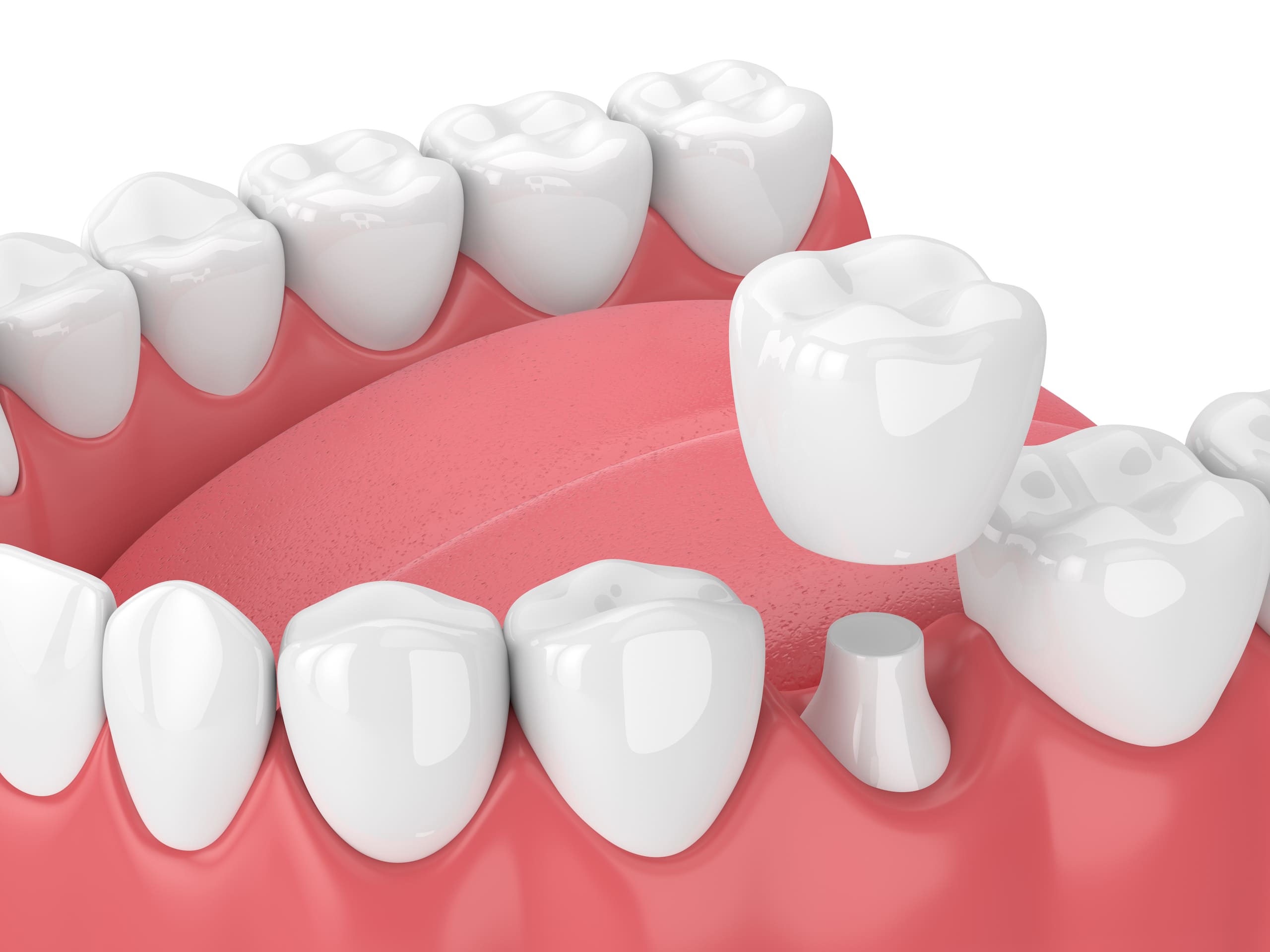
What is a Crown?
Unfortunately, Teeth do not Heal or Restore Damaged Enamel on Their Surface. However, We Can Help to Protect & Restore a Tooth with a Dental Crown.

Why Would I Need a Crown or a Bridge?
Your smile may benefit from a crown if a tooth is damaged or decayed to the point that a dental filling will not provide a successful restoration. Crowns can also be used for many other restorative and aesthetic purposes, including to:
- Protect a tooth following root canal treatment
- Anchor and attach a dental bridge
- Cover and complete a dental implant
- Enhance the beauty of your smile
- Improve a misshapen tooth
- Strengthen a tooth that is fractured or weak
- Support a large filling when little natural tooth structure remains
What is the Process?
Fitting a crown requires at least two office visits. Initially, we will remove decay, shape the tooth, and fit it with a temporary crown of either plastic or metal.
On the subsequent visit, we will remove the temporary crown, and then fit and adjust the final crown. Finally, we will cement the crown into place, and you now have a new beautiful looking tooth.
Frequently Asked Questions
These treatments are used for a long-lasting correction of major dental problems. It is usual for these treatments to last for 20 to 30 years, which is as close to permanent as dental treatment can get.
Many people worry that if their tooth hurts, they will need a root canal. This isn’t always the case. Your tooth could hurt for several reasons:
- Food is stuck between your teeth or in between the ridges of the chewing surfaces of your teeth.
- A cavity may be present.
- Your tooth could be chipped or cracked.
- You may have some enamel erosion.
The best way to determine if you need a root canal is to come and see us. We will give you a thorough examination and x-rays and discuss the best treatment options for you.
It all depends on the tooth. If the tooth is in good condition after a root canal, the dentist may opt to fill it and leave it be, especially if it is a front tooth. In almost all cases, the dentist will recommend that a crown be placed on a molar whose dental pulp has been removed. Tooth decay, as well as having a large amount of dental tissue removed during a root canal, weakens a tooth. Combined, decay and a root canal will leave the tooth at risk of crumbling when subjected to the pressure of chewing and grinding. A crown will cover the tooth, reinforce its outer structure and keep it from crumbling.